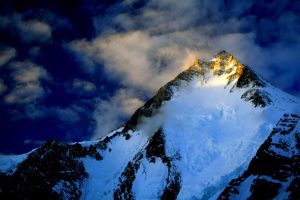
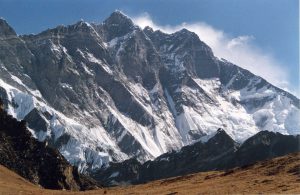
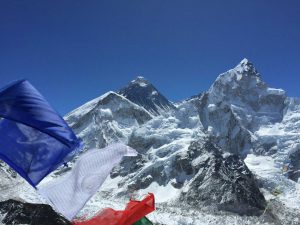
Standing at 8,485 metres (27,838 feet) above sea level, Mount Makalu is the fifth-highest mountain in the world. Situated in the heart of the Himalayas on the Nepal–China border, Makalu is renowned for its remote, isolated location and its iconic pyramid-shaped summit — one of the most visually dramatic peaks on the planet.
At the foot of Makalu lies a hidden natural treasure: the Barun Valley. Here, thundering waterfalls plunge into deep gorges, rare flora and fauna thrive in pristine ecosystems, and the rich cultural traditions of the Sherpa and Kirat communities endure. Though this region remains largely untouched by modernity, every visitor who ventures here leaves with memories that last a lifetime.
A Brief History
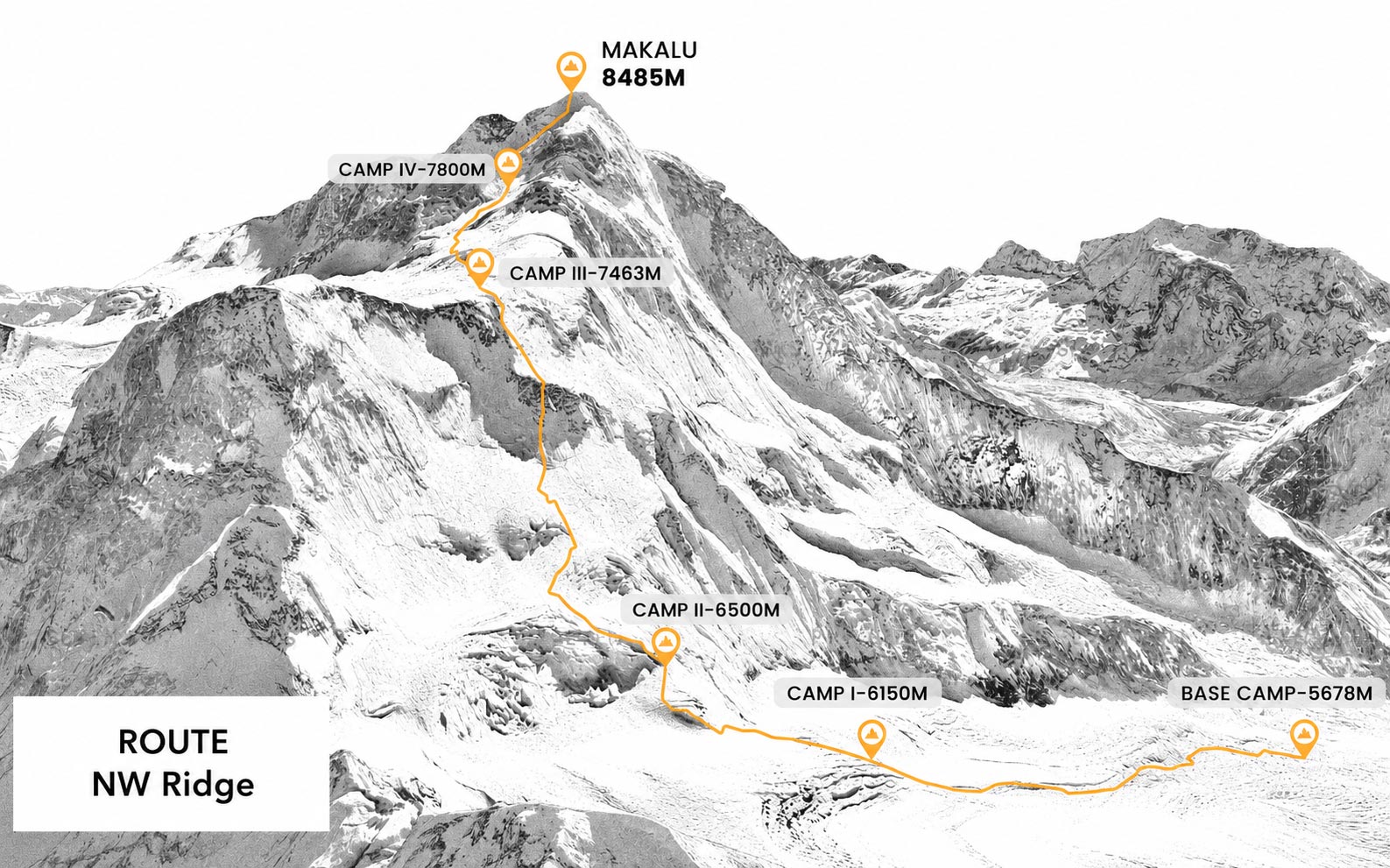
Mount Makalu was first successfully summited on 15 May 1955 by a French expedition led by Jean Franco, with climbers Lionel Terray and Jean Couzy reaching the top via the Northeast Ridge — still the most commonly attempted route today. Since that historic first ascent, numerous successful summits have followed, with the Southeast Ridge and the Northwest Ridge emerging as the two most prominent routes. Of these, the Northwest Ridge remains the preferred choice for the majority of mountaineers.
In 1997, a Russian team achieved a remarkable feat by completing the treacherous Western Route, widely regarded as the most dangerous line on the mountain. They reached the summit on 21 May 1997, cementing their place in Himalayan climbing history.
The Challenge
Climbing Makalu demands exceptional physical fitness, advanced technical climbing ability, and unwavering mental determination. The mountain's steep and exposed Northeast Ridge, combined with extreme altitude and thin air, makes this one of the most demanding expeditions in the world. Yet for those who rise to the challenge, standing atop Makalu's summit is an incomparably rewarding experience.
Our Approach
The Ultimate Himalaya Makalu Expedition begins in the second week of April in Kathmandu. The first few days are dedicated to final preparations — equipment checks, paperwork, and expedition briefings. From Kathmandu, we fly to Tumlingtar and drive to Num, where the trek to Makalu Base Camp begins.
This expedition is best suited to climbers who have prior experience on 7,000-metre peaks or higher. We follow a carefully planned rotation schedule to ensure optimal acclimatisation:
COUNTRY
Nepal
DURATION
50 Days
GRADE
Challenging
MAX ALTITUDE
8,485m / 27,838ft
GROUP SIZE
2-15 Pax
SEASON
Spring / Autumn
Featured
Makalu Expedition
50 Days · challenging
Book Now
No booking fees · Free cancellation up to 50 days
Day 01
Arrival in Kathmandu (1,400m)
Welcome to Nepal! Upon landing at Tribhuvan International Airport, you will be met by an Ultimate Himalaya representative and transferred to your 5-star. After settling in, the evening is yours to rest, explore the neighbourhood’s narrow winding streets, or simply recover from your journey. A welcome dinner will be hosted by our team where you will meet your fellow climbers, guides, and support staff.
Meals: Welcome Dinner | Accommodation: Hotel
Day 02
Rest & Expedition Preparation in Kathmandu
Today is dedicated to final preparations. We hold a comprehensive expedition briefing covering the route, safety protocols, weather patterns, and emergency procedures. You will have time to sort personal equipment, rent or purchase any last-minute gear, and ensure all documentation — permits, insurance, and medical forms — is in order. Your climbing Sherpa will be introduced, giving you the chance to discuss strategy and build rapport before heading to the mountain.
Meals: Breakfast & Dinner | Accommodation: Hotel
Day 03
Fly Kathmandu to Tumlingtar; Drive to Num (1,560m)
An early morning to the domestic airport for the spectacular flight to Tumlingtar (approximately 35 minutes), a small town perched above the Arun River Valley. On clear days, the flight offers panoramic views of the Himalayan range. From Tumlingtar, we drive by private 4×4 vehicle through terraced farmland and subtropical forest to the village of Num — a ridge-top settlement marking the true beginning of our trek. The drive takes roughly 4–5 hours on winding mountain roads.
Meals: Breakfast, Lunch & Dinner | Accommodation: Lodge
Day 04
Trek Num to Seduwa (1,510m)
Our first day on foot begins with a steep descent from Num down a series of switchbacks through lush forest to the Arun River (approximately 800m descent). After crossing a suspension bridge, we climb gradually through sal forest and terraced fields to reach Seduwa, a small Rai and Gurung village. This day introduces us to the humid, subtropical climate of the lower Makalu region and tests our legs with a sharp descent and steady ascent.
- Trekking: 5–6 hours
- Elevation Change: −50m net (with significant descent and re-ascent)
Meals: Breakfast, Lunch & Dinner | Accommodation: Lodge
Day 05
Trek Seduwa to Tashi Gaun (2,070m)
Leaving Seduwa, the trail enters the Makalu Barun National Park. After registering our permits at the park checkpoint, we ascend gradually through dense forest of rhododendron and oak, crossing several small streams. The climb becomes steeper in the final stretch as we approach Tashi Gaun, a traditional Sherpa village and the last permanent settlement on our route. The village offers stunning views south toward the Arun Valley and is surrounded by ancient birch and rhododendron forest.
- Trekking: 5–6 hours
- Elevation Gain: +560m
Meals: Breakfast, Lunch & Dinner | Accommodation: Lodge
Day 06
Acclimatisation Day at Tashi Gaun
A crucial rest day to aid acclimatisation before ascending above 3,000m. We take a short hike to higher elevation — typically toward the ridge above the village — then return to Tashi Gaun for lunch. The afternoon is free to relax, review climbing techniques, or explore the village and interact with the local Sherpa community. This day significantly reduces the risk of altitude illness on the days ahead.
- Activity: Short acclimatisation hike (+300m / −300m)
Meals: Breakfast, Lunch & Dinner | Accommodation: Lodge
Day 07
Trek Tashi Gaun to Khongma (3,760m)
Today we leave the tree line behind. The trail climbs steeply from Tashi Gaun through dense rhododendron and hemlock forest to Unshisha, where the terrain opens into alpine meadows. From here, a series of stone staircases and switchbacks lead us sharply upward to the ridge-top settlement of Khongma, a small cluster of teahouses perched on a high saddle. The views of the surrounding hills and the Chamlang massif begin to open up. This is a demanding day with significant elevation gain.
- Trekking: 6–7 hours
- Elevation Gain: +1,690m
Meals: Breakfast, Lunch & Dinner | Accommodation: Lodge
Day 08
Trek Khongma to Dobato (4,010m)
From Khongma, the trail continues its steep ascent through scrub and dwarf rhododendron to the Khongma La (also known as Shipton La), the first of three high passes we cross today at approximately 3,890m. We then traverse to Ghunta La and Tutu La, each offering dramatic views of Makalu, Chamlang, and the Barun Valley below. After crossing the final pass, we descend through moss-draped forest to Dobato, a beautiful meadow campsite with panoramic views of the surrounding peaks and valley.
- Trekking: 6–7 hours
- Elevation Gain: +250m (with multiple ascents and descents over passes)
Meals: Breakfast, Lunch & Dinner | Accommodation: Lodge
Day 09
Trek Dobato to Yangle Kharka (3,640m)
A day of dramatic descents through pristine forest. From Dobato, the trail drops steeply into the Barun River Valley through dense forest of birch, oak, and rhododendron — one of the most biodiverse sections of the trek. We follow the river downstream, crossing several wooden bridges, until we reach Yangle Kharka, a broad grassy meadow at the confluence of two rivers. This valley marks the beginning of the high Himalayan terrain, with sheer cliff walls rising thousands of metres on either side.
- Trekking: 5–6 hours
- Elevation Change: −370m
Meals: Breakfast, Lunch & Dinner | Accommodation: Lodge
Day 10
Trek Yangle Kharka to Langmale Kharka (4,450m)
We now trek northward along the Barun River, entering the heart of the Makalu Barun National Park. The valley narrows dramatically, flanked by towering granite cliffs and cascading waterfalls. The trail crosses boulder fields and glacial moraine, with Makalu’s massive south face becoming visible ahead. We pass Merek, a small seasonal settlement, before arriving at Langmale Kharka — a vast yak pasture surrounded by 6,000m peaks. Keep an eye out for Himalayan tahrs, pikas, and the elusive red panda.
- Trekking: 5–6 hours
- Elevation Gain: +810m
Meals: Breakfast, Lunch & Dinner | Accommodation: Lodge
Day 11
Trek Langmale Kharka to Makalu Lower Base Camp (4,850m)
The valley opens into a wide glacial basin as we approach the Lower Base Camp. The trail crosses open moraine fields and glacial streams, with views of Makalu, Baruntse, and the Chamlang massif dominating the horizon. We pass Shersong, a small settlement used by yak herders, before making the final push to Lower Base Camp. Here, our expedition team will have established the first camp, and the first views of Makalu’s towering pyramid from base level are truly awe-inspiring.
- Trekking: 5 hours
- Elevation Gain: +400m
Meals: Breakfast, Lunch & Dinner | Accommodation: Tent
Day 12
Acclimatisation at Lower Base Camp
Our first full rest day in the high mountains. We take a short hike above camp toward the terminal moraine of the Barun Glacier, exploring the surrounding area and allowing our bodies to adapt to the 4,850m elevation. Your Sherpa team will review ice climbing techniques, rope work, and ladder crossing in preparation for the upper mountain. The afternoon is spent resting, hydrating, and finalising plans for the rotation to Higher Base Camp.
- Activity: Short acclimatisation hike to ~5,100m
Meals: Breakfast, Lunch & Dinner | Accommodation: Tent
Day 13
Acclimatisation at Lower Base Camp
A second acclimatisation day to ensure everyone is well-adapted before moving higher. We may hike further up the glacier or rest depending on the group’s condition. Equipment is checked and distributed, and the route to Higher Base Camp is discussed in detail. This is also an opportunity to enjoy the extraordinary wilderness of the Makalu region — a landscape of rock, ice, and sky rarely witnessed by outsiders.
- Activity: Optional glacier walk or rest
Meals: Breakfast, Lunch & Dinner | Accommodation: Tent
Day 14
Trek Lower Base Camp to Higher (Main) Base Camp (5,600m)
A significant day as we relocate to our Advanced Base Camp (ABC), also referred to as Higher Base Camp. The route follows the lateral moraine of the Barun Glacier, crossing loose scree and boulder fields. As we climb, the views of Makalu’s northwest ridge become increasingly dramatic — you can now trace the entire route to the summit with the naked eye. ABC is established on a broad, relatively flat area of glacial moraine with commanding views of the mountain. The kitchen and dining tents are set up, and we settle in for the climbing phase.
- Trekking: 4–5 hours
- Elevation Gain: +750m
Meals: Breakfast, Lunch & Dinner | Accommodation: Tent
Day 15-30
Acclimatisation Rotations (Base Camp – Camp III – Base Camp)
Over the next 16 days, we follow a carefully structured rotation schedule designed to optimise acclimatisation and maximise summit success. Rotations are the cornerstone of high-altitude climbing — they allow your body to produce red blood cells and adapt to extreme hypoxia before the final summit push.
Rotation I — Base Camp to Camp I (6,100m) and Back
- Day 15–17: We trek across the glacier from ABC to Camp I, navigating crevasses with fixed ropes and ladders. Camp I is typically established on a glacial bench at the foot of the headwall. We spend 1–2 nights here, climbing to the base of the headwall and returning to ABC to recover.
Rotation II — Base Camp to Camp II (6,500m) and Back
- Day 18–22: We climb the headwall — a steep section of 45–50° ice and snow requiring front-pointing and jumar ascension on fixed lines. At the top of the headwall, Camp II sits on a narrow ledge on the northwest ridge. We spend 2–3 nights here, sleeping at altitude and climbing toward Camp III before descending to ABC for extended rest.
Rotation III — Base Camp to Camp III (7,400m) and Back
- Day 23–27: Our highest rotation takes us through the technical rock and ice sections of the northwest ridge to Camp III, a small platform at the shoulder of the mountain. We touch Camp III and then descend all the way to ABC for a 5–6 day rest period. This “down time” is critical — your body continues to adapt while you recover at Base Camp, eat well, and monitor the weather.
Rest & Weather Monitoring at Base Camp
- Day 28–30: Full rest at ABC while our weather consultants at Meteotest, Bern provide twice-daily forecasts. The climbing Sherpas and route-fixing team continue to establish and secure the route above Camp III during this period. We fine-tune our summit plans based on the latest meteorological data.
Meals: Full Board | Accommodation: High Camp Tents / Base Camp Tent
Day 31-42
Summit Phase (Base Camp – Summit – Base Camp)
With favourable weather confirmed, we begin our summit push. This is the culmination of six weeks of preparation, acclimatisation, and waiting.
The Push to Camp IV
- Day 31–33: We ascend from ABC through Camps I, II, and III, spending one night at each. By Day 33, we establish ourselves at Camp IV (7,800m) — a small, exposed camp on a narrow col near the top of the northwest ridge. Here, we rest for several hours, hydrate, and prepare for the summit bid.
Summit Day
- Day 34–36 (weather dependent): The summit push begins around 10:00 PM–12:00 AM from Camp IV. Climbing in the dark with headlamps, we ascend the final 685m of steep snow and ice on the upper northwest ridge. The route involves moderately technical mixed climbing at extreme altitude, with sections of 50–60° incline. As dawn breaks, the panorama unfolds — Everest, Lhotse, and Kangchenjunga visible to the east, and the Tibetan plateau stretching to the north.
- The Summit (8,485m): Standing on the small, pyramid-shaped summit of Makalu is an experience beyond words. After photographs, celebrations, and a moment of reflection, we begin our descent — a critical phase that demands full concentration.
- Descent to Camp II/ABC: We descend directly to Camp II or, if conditions and energy permit, continue down to ABC. The summit bid and descent typically span 18–24 hours of continuous effort.
Contingency & Spare Days
- Day 37–42: These additional days are built into the itinerary as weather contingency. If the initial summit window closes, we wait at ABC for the next opportunity. Climbers who summited early may rest, while others prepare for a second attempt if needed. This flexibility significantly increases our collective success rate.
Meals: Full Board | Accommodation: High Camp Tents / Base Camp Tent
Day 43
Base Camp Clean-Up
A collective effort to leave no trace. We dismantle tents, pack equipment, remove all waste, and transport garbage down the valley in accordance with our environmental commitment and Nepal Government regulations. The afternoon is spent resting and celebrating the expedition’s achievements with the entire team — a well-earned gathering after weeks of intense effort.
- Activity: Camp dismantling and waste removal
Meals: Breakfast, Lunch & Dinner | Accommodation: Tent
Day 44
Trek Base Camp to Yangle Kharka
We retrace our steps down the Barun Valley, descending steadily through the moraine and glacier terrain. The return journey offers a chance to appreciate the landscape from a new perspective — with the pressure of the climb behind us, many climbers find this descent meditative and deeply satisfying. We camp at Yangle Kharka, enjoying the relative warmth and thicker air of the lower valley.
- Trekking: 5–6 hours
- Elevation Change: −1,210m
Meals: Breakfast, Lunch & Dinner | Accommodation: Lodge
Day 45
Trek Yangle Kharka to Khongma
Continuing our descent, we trek from the valley floor back up and over the ridge system. The climb from the Barun River back to the ridge at Khongma is strenuous after weeks at altitude, but the changing vegetation — from alpine scrub back to dense rhododendron forest — provides a welcome reminder of the lower world. The views from the ridge remain spectacular.
- Trekking: 6–7 hours
- Elevation Change: +120m (with significant ascent/descent)
Meals: Breakfast, Lunch & Dinner | Accommodation: Lodge
Day 46
Trek Khongma to Seduwa
A long descent day. From Khongma, we drop steeply through the three passes crossed on the ascent, then continue down through oak and rhododendron forest to Tashi Gaun for a midday break. After lunch, we descend the remaining trail to Seduwa, returning to the lush, green environment of the mid-hills. The temperature rises noticeably, and the sound of the Arun River returns.
- Trekking: 6–7 hours
- Elevation Change: −2,250m
Meals: Breakfast, Lunch & Dinner | Accommodation: Lodge
Day 47
Trek Seduwa to Num; Drive to Khandbari
Our final day of trekking follows the familiar trail from Seduwa down to the Arun River, across the suspension bridge, and up the steep switchbacks to Num. From Num, our private vehicle drives us on winding mountain roads to Khandbari, the district headquarters of Sankhuwasabha and a bustling hill town. A hot shower and a comfortable bed mark a welcome return to civilisation.
- Trekking: 4–5 hours | Driving: 3 hours
- Elevation Change: −50m net trek, then road descent
Meals: Breakfast, Lunch & Dinner | Accommodation: Lodge
Day 48
Drive Khandbari to Tumlingtar; Fly to Kathmandu
An early morning drive takes us back to Tumlingtar airport. We board our return flight to Kathmandu, where the bustling streets of the capital feel almost surreal after six weeks in the wilderness. Upon arrival, you are transferred to your hotel. The evening is free — many climbers choose to gather for a celebratory dinner in Thamel.
- Driving: 3–4 hours | Flying: 35 minutes
Meals: Breakfast | Accommodation: Hotel
Day 49
Leisure Day in Kathmandu
A full day to recover, decompress, and explore Kathmandu at your own pace. Popular activities include visiting the UNESCO World Heritage Sites of Swayambhunath (Monkey Temple) or Boudhanath Stupa, shopping for souvenirs in Thamel’s handicraft shops, or simply enjoying a long massage and a leisurely meal. In the evening, we hold our farewell dinner to commemorate the expedition and present summit certificates to successful climbers.
Meals: Breakfast | Accommodation: Hotel
Day 50
Departure from Kathmandu
After breakfast, an Ultimate Himalaya representative will transfer you to Tribhuvan International Airport for your international departure. If you are extending your stay in Nepal — whether for further trekking, a jungle safari, or cultural exploration — our team will be happy to assist with arrangements.
- Meals: Breakfast
Makalu Expedition
50 Days – Detailed Itinerary
Welcome to Nepal! Upon landing at Tribhuvan International Airport, you will be met by an Ultimate Himalaya representative and transferred to your 5-star. After settling in, the evening is yours to rest, explore the neighbourhood’s narrow winding streets, or simply recover from your journey. A welcome dinner will be hosted by our team where you will meet your fellow climbers, guides, and support staff.
Meals: Welcome Dinner | Accommodation: Hotel
Today is dedicated to final preparations. We hold a comprehensive expedition briefing covering the route, safety protocols, weather patterns, and emergency procedures. You will have time to sort personal equipment, rent or purchase any last-minute gear, and ensure all documentation — permits, insurance, and medical forms — is in order. Your climbing Sherpa will be introduced, giving you the chance to discuss strategy and build rapport before heading to the mountain.
Meals: Breakfast & Dinner | Accommodation: Hotel
An early morning to the domestic airport for the spectacular flight to Tumlingtar (approximately 35 minutes), a small town perched above the Arun River Valley. On clear days, the flight offers panoramic views of the Himalayan range. From Tumlingtar, we drive by private 4×4 vehicle through terraced farmland and subtropical forest to the village of Num — a ridge-top settlement marking the true beginning of our trek. The drive takes roughly 4–5 hours on winding mountain roads.
Meals: Breakfast, Lunch & Dinner | Accommodation: Lodge
Our first day on foot begins with a steep descent from Num down a series of switchbacks through lush forest to the Arun River (approximately 800m descent). After crossing a suspension bridge, we climb gradually through sal forest and terraced fields to reach Seduwa, a small Rai and Gurung village. This day introduces us to the humid, subtropical climate of the lower Makalu region and tests our legs with a sharp descent and steady ascent.
- Trekking: 5–6 hours
- Elevation Change: −50m net (with significant descent and re-ascent)
Meals: Breakfast, Lunch & Dinner | Accommodation: Lodge
Leaving Seduwa, the trail enters the Makalu Barun National Park. After registering our permits at the park checkpoint, we ascend gradually through dense forest of rhododendron and oak, crossing several small streams. The climb becomes steeper in the final stretch as we approach Tashi Gaun, a traditional Sherpa village and the last permanent settlement on our route. The village offers stunning views south toward the Arun Valley and is surrounded by ancient birch and rhododendron forest.
- Trekking: 5–6 hours
- Elevation Gain: +560m
Meals: Breakfast, Lunch & Dinner | Accommodation: Lodge
A crucial rest day to aid acclimatisation before ascending above 3,000m. We take a short hike to higher elevation — typically toward the ridge above the village — then return to Tashi Gaun for lunch. The afternoon is free to relax, review climbing techniques, or explore the village and interact with the local Sherpa community. This day significantly reduces the risk of altitude illness on the days ahead.
- Activity: Short acclimatisation hike (+300m / −300m)
Meals: Breakfast, Lunch & Dinner | Accommodation: Lodge
Today we leave the tree line behind. The trail climbs steeply from Tashi Gaun through dense rhododendron and hemlock forest to Unshisha, where the terrain opens into alpine meadows. From here, a series of stone staircases and switchbacks lead us sharply upward to the ridge-top settlement of Khongma, a small cluster of teahouses perched on a high saddle. The views of the surrounding hills and the Chamlang massif begin to open up. This is a demanding day with significant elevation gain.
- Trekking: 6–7 hours
- Elevation Gain: +1,690m
Meals: Breakfast, Lunch & Dinner | Accommodation: Lodge
From Khongma, the trail continues its steep ascent through scrub and dwarf rhododendron to the Khongma La (also known as Shipton La), the first of three high passes we cross today at approximately 3,890m. We then traverse to Ghunta La and Tutu La, each offering dramatic views of Makalu, Chamlang, and the Barun Valley below. After crossing the final pass, we descend through moss-draped forest to Dobato, a beautiful meadow campsite with panoramic views of the surrounding peaks and valley.
- Trekking: 6–7 hours
- Elevation Gain: +250m (with multiple ascents and descents over passes)
Meals: Breakfast, Lunch & Dinner | Accommodation: Lodge
A day of dramatic descents through pristine forest. From Dobato, the trail drops steeply into the Barun River Valley through dense forest of birch, oak, and rhododendron — one of the most biodiverse sections of the trek. We follow the river downstream, crossing several wooden bridges, until we reach Yangle Kharka, a broad grassy meadow at the confluence of two rivers. This valley marks the beginning of the high Himalayan terrain, with sheer cliff walls rising thousands of metres on either side.
- Trekking: 5–6 hours
- Elevation Change: −370m
Meals: Breakfast, Lunch & Dinner | Accommodation: Lodge
We now trek northward along the Barun River, entering the heart of the Makalu Barun National Park. The valley narrows dramatically, flanked by towering granite cliffs and cascading waterfalls. The trail crosses boulder fields and glacial moraine, with Makalu’s massive south face becoming visible ahead. We pass Merek, a small seasonal settlement, before arriving at Langmale Kharka — a vast yak pasture surrounded by 6,000m peaks. Keep an eye out for Himalayan tahrs, pikas, and the elusive red panda.
- Trekking: 5–6 hours
- Elevation Gain: +810m
Meals: Breakfast, Lunch & Dinner | Accommodation: Lodge
The valley opens into a wide glacial basin as we approach the Lower Base Camp. The trail crosses open moraine fields and glacial streams, with views of Makalu, Baruntse, and the Chamlang massif dominating the horizon. We pass Shersong, a small settlement used by yak herders, before making the final push to Lower Base Camp. Here, our expedition team will have established the first camp, and the first views of Makalu’s towering pyramid from base level are truly awe-inspiring.
- Trekking: 5 hours
- Elevation Gain: +400m
Meals: Breakfast, Lunch & Dinner | Accommodation: Tent
Our first full rest day in the high mountains. We take a short hike above camp toward the terminal moraine of the Barun Glacier, exploring the surrounding area and allowing our bodies to adapt to the 4,850m elevation. Your Sherpa team will review ice climbing techniques, rope work, and ladder crossing in preparation for the upper mountain. The afternoon is spent resting, hydrating, and finalising plans for the rotation to Higher Base Camp.
- Activity: Short acclimatisation hike to ~5,100m
Meals: Breakfast, Lunch & Dinner | Accommodation: Tent
A second acclimatisation day to ensure everyone is well-adapted before moving higher. We may hike further up the glacier or rest depending on the group’s condition. Equipment is checked and distributed, and the route to Higher Base Camp is discussed in detail. This is also an opportunity to enjoy the extraordinary wilderness of the Makalu region — a landscape of rock, ice, and sky rarely witnessed by outsiders.
- Activity: Optional glacier walk or rest
Meals: Breakfast, Lunch & Dinner | Accommodation: Tent
A significant day as we relocate to our Advanced Base Camp (ABC), also referred to as Higher Base Camp. The route follows the lateral moraine of the Barun Glacier, crossing loose scree and boulder fields. As we climb, the views of Makalu’s northwest ridge become increasingly dramatic — you can now trace the entire route to the summit with the naked eye. ABC is established on a broad, relatively flat area of glacial moraine with commanding views of the mountain. The kitchen and dining tents are set up, and we settle in for the climbing phase.
- Trekking: 4–5 hours
- Elevation Gain: +750m
Meals: Breakfast, Lunch & Dinner | Accommodation: Tent
Over the next 16 days, we follow a carefully structured rotation schedule designed to optimise acclimatisation and maximise summit success. Rotations are the cornerstone of high-altitude climbing — they allow your body to produce red blood cells and adapt to extreme hypoxia before the final summit push.
Rotation I — Base Camp to Camp I (6,100m) and Back
- Day 15–17: We trek across the glacier from ABC to Camp I, navigating crevasses with fixed ropes and ladders. Camp I is typically established on a glacial bench at the foot of the headwall. We spend 1–2 nights here, climbing to the base of the headwall and returning to ABC to recover.
Rotation II — Base Camp to Camp II (6,500m) and Back
- Day 18–22: We climb the headwall — a steep section of 45–50° ice and snow requiring front-pointing and jumar ascension on fixed lines. At the top of the headwall, Camp II sits on a narrow ledge on the northwest ridge. We spend 2–3 nights here, sleeping at altitude and climbing toward Camp III before descending to ABC for extended rest.
Rotation III — Base Camp to Camp III (7,400m) and Back
- Day 23–27: Our highest rotation takes us through the technical rock and ice sections of the northwest ridge to Camp III, a small platform at the shoulder of the mountain. We touch Camp III and then descend all the way to ABC for a 5–6 day rest period. This “down time” is critical — your body continues to adapt while you recover at Base Camp, eat well, and monitor the weather.
Rest & Weather Monitoring at Base Camp
- Day 28–30: Full rest at ABC while our weather consultants at Meteotest, Bern provide twice-daily forecasts. The climbing Sherpas and route-fixing team continue to establish and secure the route above Camp III during this period. We fine-tune our summit plans based on the latest meteorological data.
Meals: Full Board | Accommodation: High Camp Tents / Base Camp Tent
With favourable weather confirmed, we begin our summit push. This is the culmination of six weeks of preparation, acclimatisation, and waiting.
The Push to Camp IV
- Day 31–33: We ascend from ABC through Camps I, II, and III, spending one night at each. By Day 33, we establish ourselves at Camp IV (7,800m) — a small, exposed camp on a narrow col near the top of the northwest ridge. Here, we rest for several hours, hydrate, and prepare for the summit bid.
Summit Day
- Day 34–36 (weather dependent): The summit push begins around 10:00 PM–12:00 AM from Camp IV. Climbing in the dark with headlamps, we ascend the final 685m of steep snow and ice on the upper northwest ridge. The route involves moderately technical mixed climbing at extreme altitude, with sections of 50–60° incline. As dawn breaks, the panorama unfolds — Everest, Lhotse, and Kangchenjunga visible to the east, and the Tibetan plateau stretching to the north.
- The Summit (8,485m): Standing on the small, pyramid-shaped summit of Makalu is an experience beyond words. After photographs, celebrations, and a moment of reflection, we begin our descent — a critical phase that demands full concentration.
- Descent to Camp II/ABC: We descend directly to Camp II or, if conditions and energy permit, continue down to ABC. The summit bid and descent typically span 18–24 hours of continuous effort.
Contingency & Spare Days
- Day 37–42: These additional days are built into the itinerary as weather contingency. If the initial summit window closes, we wait at ABC for the next opportunity. Climbers who summited early may rest, while others prepare for a second attempt if needed. This flexibility significantly increases our collective success rate.
Meals: Full Board | Accommodation: High Camp Tents / Base Camp Tent
A collective effort to leave no trace. We dismantle tents, pack equipment, remove all waste, and transport garbage down the valley in accordance with our environmental commitment and Nepal Government regulations. The afternoon is spent resting and celebrating the expedition’s achievements with the entire team — a well-earned gathering after weeks of intense effort.
- Activity: Camp dismantling and waste removal
Meals: Breakfast, Lunch & Dinner | Accommodation: Tent
We retrace our steps down the Barun Valley, descending steadily through the moraine and glacier terrain. The return journey offers a chance to appreciate the landscape from a new perspective — with the pressure of the climb behind us, many climbers find this descent meditative and deeply satisfying. We camp at Yangle Kharka, enjoying the relative warmth and thicker air of the lower valley.
- Trekking: 5–6 hours
- Elevation Change: −1,210m
Meals: Breakfast, Lunch & Dinner | Accommodation: Lodge
Continuing our descent, we trek from the valley floor back up and over the ridge system. The climb from the Barun River back to the ridge at Khongma is strenuous after weeks at altitude, but the changing vegetation — from alpine scrub back to dense rhododendron forest — provides a welcome reminder of the lower world. The views from the ridge remain spectacular.
- Trekking: 6–7 hours
- Elevation Change: +120m (with significant ascent/descent)
Meals: Breakfast, Lunch & Dinner | Accommodation: Lodge
A long descent day. From Khongma, we drop steeply through the three passes crossed on the ascent, then continue down through oak and rhododendron forest to Tashi Gaun for a midday break. After lunch, we descend the remaining trail to Seduwa, returning to the lush, green environment of the mid-hills. The temperature rises noticeably, and the sound of the Arun River returns.
- Trekking: 6–7 hours
- Elevation Change: −2,250m
Meals: Breakfast, Lunch & Dinner | Accommodation: Lodge
Our final day of trekking follows the familiar trail from Seduwa down to the Arun River, across the suspension bridge, and up the steep switchbacks to Num. From Num, our private vehicle drives us on winding mountain roads to Khandbari, the district headquarters of Sankhuwasabha and a bustling hill town. A hot shower and a comfortable bed mark a welcome return to civilisation.
- Trekking: 4–5 hours | Driving: 3 hours
- Elevation Change: −50m net trek, then road descent
Meals: Breakfast, Lunch & Dinner | Accommodation: Lodge
An early morning drive takes us back to Tumlingtar airport. We board our return flight to Kathmandu, where the bustling streets of the capital feel almost surreal after six weeks in the wilderness. Upon arrival, you are transferred to your hotel. The evening is free — many climbers choose to gather for a celebratory dinner in Thamel.
- Driving: 3–4 hours | Flying: 35 minutes
Meals: Breakfast | Accommodation: Hotel
A full day to recover, decompress, and explore Kathmandu at your own pace. Popular activities include visiting the UNESCO World Heritage Sites of Swayambhunath (Monkey Temple) or Boudhanath Stupa, shopping for souvenirs in Thamel’s handicraft shops, or simply enjoying a long massage and a leisurely meal. In the evening, we hold our farewell dinner to commemorate the expedition and present summit certificates to successful climbers.
Meals: Breakfast | Accommodation: Hotel
After breakfast, an Ultimate Himalaya representative will transfer you to Tribhuvan International Airport for your international departure. If you are extending your stay in Nepal — whether for further trekking, a jungle safari, or cultural exploration — our team will be happy to assist with arrangements.
- Meals: Breakfast
Inclusions
Arrival & Departure
- Private airport transfers (pick-up and drop-off) in Kathmandu.
Accommodation in Kathmandu
- 4 nights in a 4-star hotel (single room) on a bed-and-breakfast basis.
Welcome Dinner
- One welcome dinner at a top-tier restaurant in Kathmandu with the Ultimate Himalaya team.
Cargo Clearance
- Assistance with cargo clearance through Nepal Customs (clearance fees are chargeable).
Permits
- Expedition royalty and Nepal Government climbing permit for Mt. Makalu.
- Makalu Barun National Park entry permit and associated fees.
Liaison Officer
- One government-appointed Liaison Officer with full equipment, salary, and accommodation provided.
Waste Management
- Stool shipment transfer and garbage deposit fees.
Insurance
- Medical and emergency rescue insurance for all Nepalese staff throughout the trek and expedition.
Equipment & Resources
- Trekking and climbing map.
- One Ultimate Himalaya duffle bag.
Transportation
- Domestic flights: Kathmandu – Tumlingtar – Kathmandu.
- Ground transport: Tumlingtar – Num and Num – Tumlingtar, as per the itinerary.
Expedition Logistics
- All expedition equipment transported for members and staff from Kathmandu to Tumlingtar (by air cargo / truck) and on to Base Camp (by porters). Return logistics from Base Camp to Kathmandu are also included. Alternative transport methods may be used depending on conditions.
Personal Baggage
- Up to 60 kg of personal baggage per member, carried by porters during the trek.
Food & Accommodation on Trek
- Three meals daily (breakfast, lunch, and dinner, including tea and coffee) with accommodation at hotels, lodges, or tents as per the itinerary.
- Fresh, hygienic meals throughout — including green vegetables, meat, fruit, soft drinks, and juice, resupplied by helicopter where necessary.
- Well-appointed base camp setup for all members and staff.
Camping Arrangements
- All necessary camping logistics during the trek.
Porter Services
- Dedicated porters for each member to and from Base Camp.
Base Camp Staff
- Experienced and trained Base Camp cook and kitchen assistants.
Staff Salaries & Allowances
- Daily wages, salaries, equipment, food, and clothing for all Nepalese staff and porters.
Base Camp Facilities
- Individual box tent for each member at Base Camp.
- Foam mattress and pillow per member.
- Dining tent, kitchen tent, communication tent, toilet and shower tents, staff tents, storage tent, tables, chairs, and all necessary cooking equipment.
- Heaters in the dining tent and other essential areas.
- Solar panel and generator for lighting, battery charging, laptops, and electronic devices.
Training
- Oxygen, mask, regulator, ice wall, and ladder training at Base Camp, led by a UIAGM guide.
High-Altitude Climbing Sherpa
- One veteran, government-licensed climbing Sherpa per member (1:1 ratio) for the entire climb — from Base Camp to the summit and back, including all rotations.
- Assistance with carrying gear to high camps.
- Sherpa salary, equipment, food, and clothing included.
Oxygen & Breathing Equipment
- 4 x 4-litre oxygen bottles per member.
- 2 x oxygen bottles per high-altitude Sherpa.
- 1 x summit oxygen mask and regulator set per member and per high-altitude Sherpa.
- Backup oxygen cylinder, mask, and regulator available (additional charge applies).
High Camp Services
- High-altitude tents, cooking gas, cooking pots, and high-altitude food for members, Sherpas, and crew at Camps I, II, III, and IV.
- Group climbing equipment: fixed and dynamic rope as required.
High Camp Tents
- Members share tents at high camps (2 members per tent).
Route Fixing
- Experienced Sherpa team (including your personal Sherpa) will fix ropes along the route — no extra charge.
Communication
- Satellite phone for emergencies (carried by Sherpa; available for members at an additional charge).
- Walkie-talkie communication between Base Camp and the mountain.
- Satellite phone and walkie-talkie permits for all members and staff.
Internet & Weather
- Internet access at Base Camp (subject to charge).
- Regular weather forecast reports from Meteotest, Bern (Switzerland) throughout the expedition.
Medical Support
- Comprehensive medical kit for all members and staff.
Certification
- Makalu climbing certificate issued by the Ministry of Culture, Tourism and Civil Aviation (MoCTCA) upon successful summit.
Exclusions
- International airfare to and from Kathmandu.
- Nepal entry visa fee — USD $125 for 90 days.
- Lunch and dinner in Kathmandu (also applies in case of early return from the trek or expedition).
- Extra nights’ accommodation in Kathmandu due to early arrival, late departure, early return from the expedition, or domestic flight cancellations.
- Travel insurance covering medical treatment and high-altitude evacuation (trip cancellation, interruption, rescue, air evacuation, medical treatment, and repatriation) — mandatory.
- Personal expenses — telephone calls, internet, toiletries, battery charging, hot showers, laundry, soft drinks, beer, and alcoholic beverages (soft drinks are provided for members at Base Camp).
- Personal climbing equipment — clothing, packs, bags, personal medical kit, and all personal trekking and climbing gear.
- Toiletries — soap, shampoo, toilet and tissue paper, toothpaste, and other personal hygiene items.
- Filming permits — special filming, camera, and drone permit fees.
- Internet access during the trek (outside of Base Camp).
- Summit bonus for climbing Sherpa — minimum USD $1,500.
- Tips for Base Camp and high camp staff — minimum USD $350.
- Any other services or activities not mentioned in the itinerary or listed under “What Is Included.”
Map