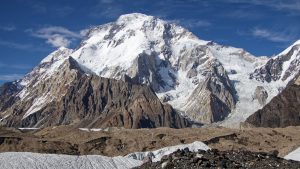
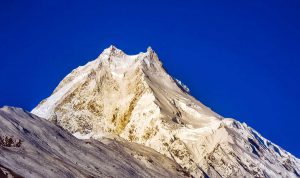
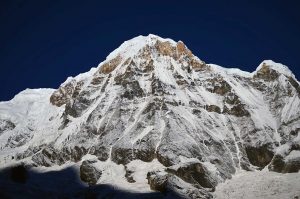
Mount Dhaulagiri — the "White Mountain" — is the seventh highest peak on Earth at 8,167 metres (26,795 feet). Its massive, snow-covered massif rises in solitary grandeur above the Kali Gandaki Valley, separated from the Annapurna range by one of the deepest gorges in the world, creating one of the most dramatic mountain panoramas in the Himalayas.
Rising to 8,167 metres (26,795 feet), Mount Dhaulagiri I — whose name means "White Mountain" in Sanskrit — is the seventh-highest peak in the world and one of the most formidable mountains on Earth. Located in north-central Nepal, Dhaulagiri forms the centrepiece of the Dhaulagiri Himal, a subrange of the Himalayas that extends 120 kilometres from the Kali Gandaki River west to the Bheri. Its sheer south face — a massive wall of ice and rock rising over 4,000 metres — is one of the most dramatic mountain faces in the world, visible from the hills of Pokhara over 70 kilometres away.
Unlike many 8,000ers that sit on political borders, Dhaulagiri lies entirely within Nepal. Its isolation from neighbouring peaks gives it an unmistakable visual dominance across the landscape. The mountain's reputation among mountaineers is legendary: all of Dhaulagiri's routes are technically demanding, physically brutal, and psychologically unforgiving. It is a mountain that commands respect — and only veterans with significant high-altitude experience need apply.
A Brief History
Mount Dhaulagiri was first successfully summited on 13 May 1960 by a joint Swiss–Austrian expedition led by the legendary Kurt Diemberger, with climbers Peter Diener, Ernst Forrer, Albin Schelbert, and Sherpas Nyima Dorji and Nawang Dorji reaching the top via the North-East Ridge — the route now known as the Normal Route. The expedition had endured months of difficult reconnaissance, including the discovery of the Hidden Valley approach that would become the standard access route to the mountain.
Since that historic first ascent, Dhaulagiri has been climbed from virtually every direction — its south face, west ridge, east face, and numerous other technical variations — yet the North-East Ridge remains the most practical and most frequently attempted route. The mountain has earned a reputation as one of the more technically challenging 8,000ers, with its combination of extreme altitude, severe weather, avalanche-prone slopes, and exposed ridgeline climbing.
In 1981, the South Face was finally conquered by a Yugoslav team led by Tone Skarja — a landmark achievement given that the face had repelled some of the strongest teams in mountaineering history. Other notable ascents include the first winter ascent in 1985 by a Polish team and numerous difficult technical routes established by elite climbers from around the world.
The Challenge
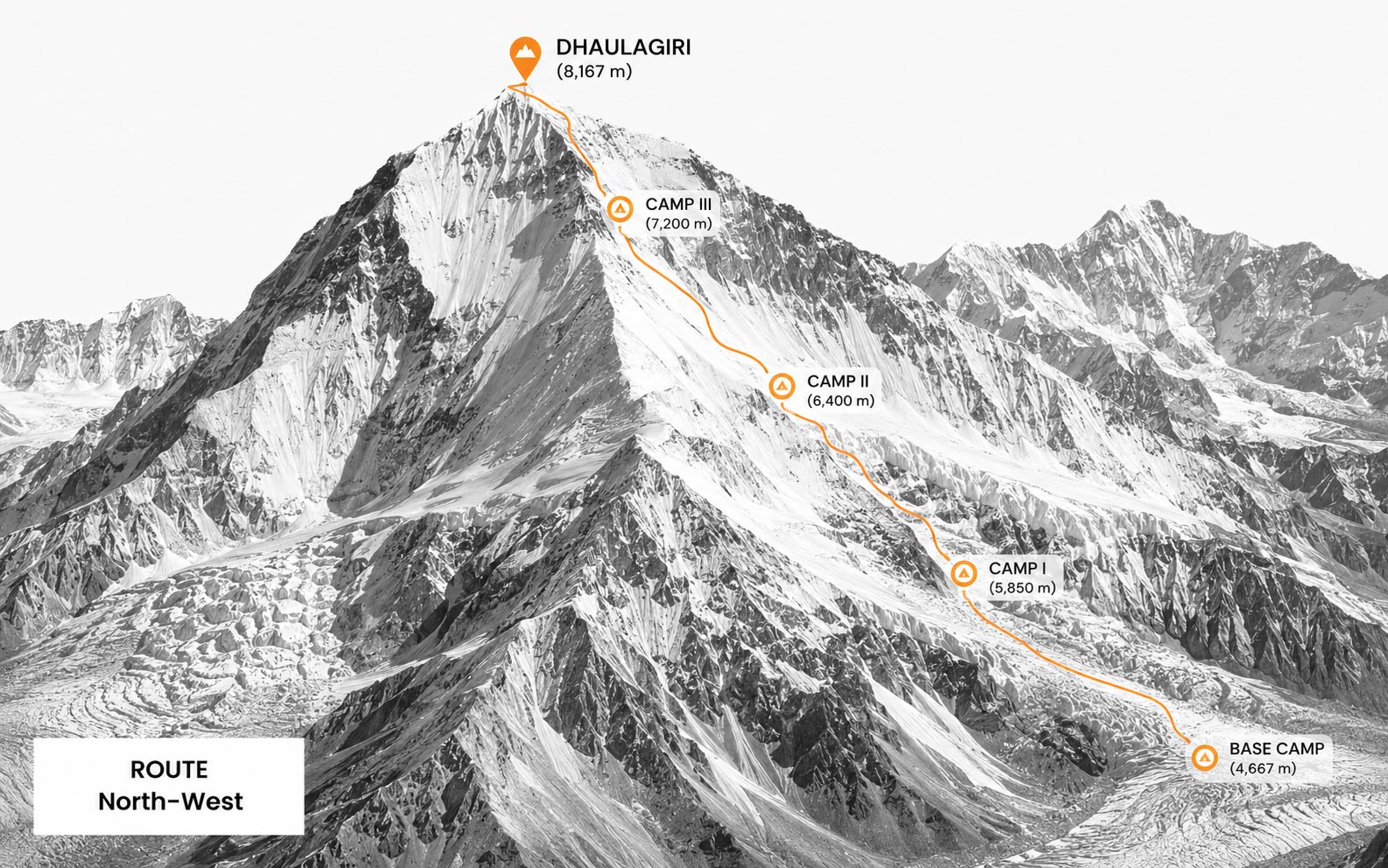
Dhaulagiri is not a mountain for the inexperienced. The North-East Ridge — the "Normal Route" — involves steep ice and snow climbing, technical rock sections, dangerous serac fields, and exposed ridgeline traverses at extreme altitude. The weather on Dhaulagiri is notoriously unpredictable, with fierce winds sweeping across its exposed summit ridge. Avalanche danger on the approach slopes and in the upper mountain remains a constant concern throughout the climbing season.
The psychological demands are equally significant. Days 28–34, the summit push window, will test every ounce of your endurance, decision-making ability, and mental resilience. For those who possess the experience, fitness, and determination to meet this challenge, the summit of Dhaulagiri offers one of the most spectacular vantage points in the entire Himalayas — with uninterrupted views from Annapurna to the Tibetan plateau.
Our Approach
The Ultimate Himalaya Dhaulagiri Expedition begins in Kathmandu before flying to Pokhara, Nepal's adventure capital. From Pokhara, we drive to Marpha — a charming Thakali village in the Lower Mustang region — where we begin our trek. The approach to Dhaulagiri is one of the most beautiful in the Himalayas, taking us through the legendary Hidden Valley over the Thapa Pass (5,244m) before arriving at Base Camp.
This expedition is designed for climbers with proven experience on 7,000-metre peaks or previous 8,000er attempts. Our carefully structured rotation schedule ensures optimal acclimatisation:
COUNTRY
Nepal
DURATION
40 Days
GRADE
Challenging
MAX ALTITUDE
8,167m / 26,795ft
GROUP SIZE
2-15 Pax
SEASON
Spring / Autumn
Featured
Dhaulagiri Expedition
40 Days · challenging
Book Now
No booking fees · Free cancellation up to 50 days
Day 01
Arrival in Kathmandu (1,400m)
Welcome to Nepal! Upon arrival at Tribhuvan International Airport, an Ultimate Himalaya representative will greet you and transfer you to your 5-star hotel. After settling in, take the evening to relax or explore the lively streets of Kathmandu. Tonight, we host a welcome dinner where you will meet your fellow climbers, guides, and support staff, and receive a preliminary overview of the expedition ahead.
Meals: Welcome Dinner | Accommodation: Hotel
Day 02
Rest & Expedition Preparation in Kathmandu
A full day dedicated to preparation. We begin with a comprehensive expedition briefing covering the route, safety protocols, equipment checks, and emergency procedures. The afternoon is spent finalising permits, reviewing insurance documentation, and conducting a thorough gear check. Any last-minute equipment can be rented or purchased from Thamel’s well-stocked mountaineering shops. Your personal climbing Sherpa will be formally introduced, giving you the opportunity to discuss strategy and build a working rapport before departing for the mountains.
Meals: Breakfast & Dinner | Accommodation: Hotel
Day 03
Fly Kathmandu to Pokhara (960m)
After breakfast, we transfer to the domestic terminal for a morning flight to Pokhara (approximately 25 minutes) — Nepal’s scenic lake city and the gateway to the Annapurna and Dhaulagiri ranges. On clear days, the flight offers spectacular aerial views of the Himalayan chain. Upon arrival, we check into our hotel and spend the afternoon exploring Pokhara’s lakeside boulevard, enjoying views of Phewa Lake with Machhapuchhre and the Annapurna range reflected in its waters. An early night ensures we are rested for the road journey to Marpha tomorrow.
Meals: Breakfast | Accommodation: Hotel (3-star)
Day 04
Drive Pokhara to Marpha (2,670m)
A long but spectacular day on the road. We depart Pokhara early in private 4×4 vehicles, following the Kali Gandaki corridor northward through subtropical hills into the rain shadow of the Himalayas. The journey passes through the towns of Beni, Tatopani (famous for its natural hot springs), and Jomsom — the administrative centre of Mustang — before reaching Marpha, a picturesque whitewashed village perched above the Kali Gandaki River. Marpha is renowned for its apple orchards, traditional Thakali culture, and ancient Buddhist gompas. The dramatic change in landscape — from lush green hills to stark, arid high-altitude terrain — is remarkable.
- Driving: 7–8 hours
- Elevation Gain: +1,710m
Meals: Breakfast, Lunch & Dinner | Accommodation: Lodge
Day 05
Acclimatisation in Marpha; Explore Muktinath (Rest Day)
A strategically planned acclimatisation day before we ascend above 4,000m. We take a morning excursion to Muktinath (3,800m), one of the most sacred pilgrimage sites in Nepal — revered by both Hindus and Buddhists. The temple complex, set in a dramatic high-altitude landscape beneath Thorong La, features 108 stone water spouts and an eternal flame fuelled by natural gas. The excursion provides valuable altitude exposure while allowing us to return to Marpha for the night. The afternoon is free to rest, explore Marpha’s narrow cobblestone alleyways, or sample the village’s famous apple pie and brandy.
- Activity: Drive/trek to Muktinath (3,800m) and return
- Elevation Exposure: +1,130m / −1,130m
Meals: Breakfast, Lunch & Dinner | Accommodation: Lodge
Day 06
Trek Marpha to Yak Kharka (4,900m)
Leaving the village behind, we trek northward into increasingly wild and remote terrain. The trail ascends gradually through the Kali Gandaki Valley, crossing tributary streams and traversing alpine scrubland. Vegetation becomes sparse as we gain altitude — junipers and dwarf shrubs give way to barren rock and scree. Yak Kharka is a broad alpine pasture traditionally used by yak herders from Marpha and Tukuche, set in a stunning amphitheatre of peaks. This is our first night camping, and the team will establish a comfortable tented camp with full kitchen service.
- Trekking: 5–6 hours
- Elevation Gain: +2,230m
Meals: Breakfast, Lunch & Dinner | Accommodation: Tent
Day 07
Trek Yak Kharka to Dhampus Base Camp / Hidden Valley (4,750m) via Thapa Pass (5,244m)
One of the most dramatic days of the approach trek. We climb steadily from Yak Kharka toward Thapa Pass (also known as Dhampus Pass) at 5,244m — the high point of our trek to Base Camp. The pass offers extraordinary 360-degree views: Dhaulagiri I, II, and III to the west; Tukuche Peak and Nilgiri to the east; and the vast Tibetan plateau visible to the north beyond the Mustang ranges. The descent from Thapa Pass is steep and loose, dropping into the legendary Hidden Valley — a vast, high-altitude glacial basin surrounded by towering peaks on all sides. This hidden sanctuary was the key to unlocking Dhaulagiri’s summit, discovered during the reconnaissance for the 1960 first ascent. We establish Dhampus Base Camp (also called French Pass Camp) in this remote, awe-inspiring valley.
- Trekking: 6–7 hours
- Elevation Change: +344m to Thapa Pass, then −494m descent
Meals: Breakfast, Lunch & Dinner | Accommodation: Tent
Day 08
Trek Dhampus Base Camp to Dhaulagiri Base Camp (4,750m)
A relatively short but physically demanding day. From the Hidden Valley, we trek across glacial moraine and rocky terrain, following the lateral moraine of the Dhaulagiri Glacier. The trail involves crossing loose scree, boulder fields, and glacial streams fed by the icefall above. As we approach Base Camp, the sheer scale of Dhaulagiri’s north face becomes overwhelming — a wall of ice and rock rising nearly 4,000 vertical metres above us. Our Base Camp at 4,750m is established on the glacial moraine with direct views of the climbing route. The kitchen and dining tents are set up, and we settle in for the climbing phase of the expedition.
- Trekking: 4–5 hours
- Elevation Change: Minimal (lateral traverse)
Meals: Breakfast, Lunch & Dinner | Accommodation: Tent
Day 09-27
Acclimatisation Rotations (Base Camp – Camp III – Base Camp)
Over the next 19 days, we follow a systematic rotation schedule — the proven method for safe acclimatisation to extreme altitude. These rotations allow your body to produce additional red blood cells and adapt to hypoxic conditions before the final summit push.
Rotation I — Base Camp to Camp I (5,850m) and Return
- Day 9–12: From Base Camp, we cross the Dhaulagiri Glacier — navigating crevasses using fixed ladders and ropes — then climb the steep snow and ice slope to the North-East Ridge. Camp I is established on a relatively broad snow terrace at 5,850m. We spend 2–3 nights here, climbing to the base of the icefall between Camps I and II before descending to Base Camp for rest.
Rotation II — Base Camp to Camp II (6,400m) and Return
- Day 13–17: We ascend through the icefall — a technically demanding section of steep ice, serac fields, and crevasses — to reach Camp II at 6,400m. This camp sits on a narrow ledge on the ridge, with dramatic exposure on both sides. We spend 2–3 nights at Camp II, carrying loads to Camp III and familiarising ourselves with the terrain of the upper mountain before descending to Base Camp for an extended rest period.
Rotation III — Base Camp to Camp III (7,400m) and Return
- Day 18–22: Our final and highest rotation takes us to Camp III at 7,400m — a small, exposed camp on the upper ridge. The route involves steep snow and ice climbing at extreme altitude, with sections of 45–55° gradient on the fixed ropes. We spend 1–2 nights at Camp III, then descend directly to Base Camp for a 5–6 day rest period.
Rest & Weather Monitoring at Base Camp
- Day 23–27: A crucial recovery period at Base Camp while our bodies continue to adapt. During this time, our route-fixing Sherpas establish and secure the route above Camp III, and we receive twice-daily weather forecasts from Meteotest, Bern. We hydrate extensively, consume high-calorie foods, and maintain light activity to keep muscles engaged while monitoring the development of a stable weather window.
Meals: Full Board | Accommodation: High Camp Tents / Base Camp Tent
Day 28-34
Summit Phase (Base Camp – Summit – Base Camp)
When a stable weather window is confirmed, we launch our summit push — the culmination of nearly a month of preparation and acclimatisation.
The Approach to Camp III
- Day 28–29: We ascend rapidly from Base Camp through Camps I and II, spending minimal time at each, and establish ourselves at Camp III (7,400m) by Day 29. Here, we rest, hydrate, and prepare mentally and physically for the summit bid.
Summit Day
- Day 30–32 (weather dependent): The summit push begins around 10:00 PM–12:00 AM from Camp III. Climbing by headlamp, we ascend the upper North-East Ridge — a long, committing climb of approximately 767m of elevation gain. The route involves steep snow and ice on fixed lines, with sections of mixed rock and ice climbing near the summit ridge. The final approach to the summit involves traversing a narrow, exposed ridgeline — one of the most exhilarating sections of the entire climb.
- The Summit (8,167m): The summit of Dhaulagiri is a relatively small, wind-scoured platform with space for only a few people at a time. The views are staggering — the entire Annapurna range to the east, the Tibetan plateau to the north, and the vastness of the Dhaulagiri Himal unfolding to the west. After summit photographs and a moment of reflection, we begin our descent — a critical phase that demands full concentration and disciplined pacing.
- Descent to Camp II/Base Camp: We descend to Camp II for the night, or if energy and conditions permit, push directly down to Base Camp. The summit push and descent typically span 18–22 hours of sustained effort.
Contingency Days
- Day 33–34: Built into the itinerary as a weather contingency. If the initial summit window proves unfavourable, we return to Base Camp and wait for the next opportunity. This flexibility significantly increases our overall summit success rate and ensures we do not take unnecessary risks.
Meals: Full Board | Accommodation: High Camp Tents / Base Camp Tent
Day 35
Trek Dhaulagiri Base Camp to Yak Kharka (3,680m)
With the climbing phase complete, we begin our return journey. We retrace our steps from Base Camp across the Dhaulagiri Glacier and descend through the Hidden Valley. The route to Yak Kharka involves a long, sustained descent with significant elevation loss. The thinner air of the high camps gives way to more breathable conditions, and the stark alpine terrain gradually softens. We camp at Yak Kharka, enjoying a celebratory dinner with the team and reflecting on the achievements of the past weeks.
- Trekking: 5–6 hours
- Elevation Change: −1,070m
Meals: Breakfast, Lunch & Dinner | Accommodation: Tent
Day 36
Trek Yak Kharka to Marpha
A scenic descent through the Kali Gandaki Valley back to civilisation. From Yak Kharka, the trail descends steadily through alpine scrub into the drier, terraced landscape of Lower Mustang. The dramatic change in vegetation — from barren high-altitude desert to apple orchards and cultivated fields — is striking. We arrive in Marpha in time for a late lunch, with the afternoon free to enjoy a hot shower, explore the village’s famous apple distilleries, and relax in one of the cosy teahouses.
- Trekking: 4–5 hours
- Elevation Change: −2,230m
Meals: Breakfast, Lunch & Dinner | Accommodation: Lodge
Day 37
Drive Marpha to Pokhara
We bid farewell to the high mountains and board our private 4×4 vehicles for the return journey to Pokhara. The drive follows the Kali Gandaki River southward, retracing the route we took nearly five weeks ago. The landscape transforms from arid Mustang back through the deepest gorge in the world to the subtropical green hills of the mid-country. We arrive in Pokhara by late afternoon with time to stroll along Phewa Lake and enjoy a well-deserved meal at one of Lakeside’s many restaurants.
- Driving: 7–8 hours
Meals: Breakfast & Lunch | Accommodation: Hotel (3-star)
Day 38
Fly Pokhara to Kathmandu; Transfer to Hotel
A morning flight returns us to Kathmandu (approximately 25 minutes). Upon arrival, you are transferred to your hotel in Thamel. The day is free — many climbers take the opportunity to visit Kathmandu’s UNESCO World Heritage Sites, shop for souvenirs in Thamel’s handicraft shops, or simply enjoy a long massage and a leisurely lunch. In the evening, we gather for our farewell dinner to celebrate the expedition and present summit certificates and mementos to all team members.
Meals: Breakfast | Accommodation: Hotel
Day 39
Leisure Day in Kathmandu
A full buffer day to rest, decompress, and enjoy Kathmandu at your own pace. Popular options include visiting Swayambhunath (Monkey Temple), Boudhanath Stupa, or the ancient city of Patan. Thamel’s shops offer everything from handcrafted thangka paintings and pashmina shawls to trekking gear and traditional Nepali artefacts. This is also an ideal day to sort photographs, exchange contact details with team members, and simply absorb the contrasts between the serene mountains and the vibrant chaos of the capital.
Meals: Breakfast | Accommodation: Hotel
Day 40
Departure from Kathmandu
After breakfast, an Ultimate Himalaya representative will transfer you to Tribhuvan International Airport for your international departure. If you are extending your stay in Nepal — for further trekking, a jungle safari in Chitwan, or a cultural tour of the Kathmandu Valley — our team will be happy to assist with all arrangements.
Meals: Breakfast
Dhaulagiri Expedition
40 Days – Detailed Itinerary
Welcome to Nepal! Upon arrival at Tribhuvan International Airport, an Ultimate Himalaya representative will greet you and transfer you to your 5-star hotel. After settling in, take the evening to relax or explore the lively streets of Kathmandu. Tonight, we host a welcome dinner where you will meet your fellow climbers, guides, and support staff, and receive a preliminary overview of the expedition ahead.
Meals: Welcome Dinner | Accommodation: Hotel
A full day dedicated to preparation. We begin with a comprehensive expedition briefing covering the route, safety protocols, equipment checks, and emergency procedures. The afternoon is spent finalising permits, reviewing insurance documentation, and conducting a thorough gear check. Any last-minute equipment can be rented or purchased from Thamel’s well-stocked mountaineering shops. Your personal climbing Sherpa will be formally introduced, giving you the opportunity to discuss strategy and build a working rapport before departing for the mountains.
Meals: Breakfast & Dinner | Accommodation: Hotel
After breakfast, we transfer to the domestic terminal for a morning flight to Pokhara (approximately 25 minutes) — Nepal’s scenic lake city and the gateway to the Annapurna and Dhaulagiri ranges. On clear days, the flight offers spectacular aerial views of the Himalayan chain. Upon arrival, we check into our hotel and spend the afternoon exploring Pokhara’s lakeside boulevard, enjoying views of Phewa Lake with Machhapuchhre and the Annapurna range reflected in its waters. An early night ensures we are rested for the road journey to Marpha tomorrow.
Meals: Breakfast | Accommodation: Hotel (3-star)
A long but spectacular day on the road. We depart Pokhara early in private 4×4 vehicles, following the Kali Gandaki corridor northward through subtropical hills into the rain shadow of the Himalayas. The journey passes through the towns of Beni, Tatopani (famous for its natural hot springs), and Jomsom — the administrative centre of Mustang — before reaching Marpha, a picturesque whitewashed village perched above the Kali Gandaki River. Marpha is renowned for its apple orchards, traditional Thakali culture, and ancient Buddhist gompas. The dramatic change in landscape — from lush green hills to stark, arid high-altitude terrain — is remarkable.
- Driving: 7–8 hours
- Elevation Gain: +1,710m
Meals: Breakfast, Lunch & Dinner | Accommodation: Lodge
A strategically planned acclimatisation day before we ascend above 4,000m. We take a morning excursion to Muktinath (3,800m), one of the most sacred pilgrimage sites in Nepal — revered by both Hindus and Buddhists. The temple complex, set in a dramatic high-altitude landscape beneath Thorong La, features 108 stone water spouts and an eternal flame fuelled by natural gas. The excursion provides valuable altitude exposure while allowing us to return to Marpha for the night. The afternoon is free to rest, explore Marpha’s narrow cobblestone alleyways, or sample the village’s famous apple pie and brandy.
- Activity: Drive/trek to Muktinath (3,800m) and return
- Elevation Exposure: +1,130m / −1,130m
Meals: Breakfast, Lunch & Dinner | Accommodation: Lodge
Leaving the village behind, we trek northward into increasingly wild and remote terrain. The trail ascends gradually through the Kali Gandaki Valley, crossing tributary streams and traversing alpine scrubland. Vegetation becomes sparse as we gain altitude — junipers and dwarf shrubs give way to barren rock and scree. Yak Kharka is a broad alpine pasture traditionally used by yak herders from Marpha and Tukuche, set in a stunning amphitheatre of peaks. This is our first night camping, and the team will establish a comfortable tented camp with full kitchen service.
- Trekking: 5–6 hours
- Elevation Gain: +2,230m
Meals: Breakfast, Lunch & Dinner | Accommodation: Tent
One of the most dramatic days of the approach trek. We climb steadily from Yak Kharka toward Thapa Pass (also known as Dhampus Pass) at 5,244m — the high point of our trek to Base Camp. The pass offers extraordinary 360-degree views: Dhaulagiri I, II, and III to the west; Tukuche Peak and Nilgiri to the east; and the vast Tibetan plateau visible to the north beyond the Mustang ranges. The descent from Thapa Pass is steep and loose, dropping into the legendary Hidden Valley — a vast, high-altitude glacial basin surrounded by towering peaks on all sides. This hidden sanctuary was the key to unlocking Dhaulagiri’s summit, discovered during the reconnaissance for the 1960 first ascent. We establish Dhampus Base Camp (also called French Pass Camp) in this remote, awe-inspiring valley.
- Trekking: 6–7 hours
- Elevation Change: +344m to Thapa Pass, then −494m descent
Meals: Breakfast, Lunch & Dinner | Accommodation: Tent
A relatively short but physically demanding day. From the Hidden Valley, we trek across glacial moraine and rocky terrain, following the lateral moraine of the Dhaulagiri Glacier. The trail involves crossing loose scree, boulder fields, and glacial streams fed by the icefall above. As we approach Base Camp, the sheer scale of Dhaulagiri’s north face becomes overwhelming — a wall of ice and rock rising nearly 4,000 vertical metres above us. Our Base Camp at 4,750m is established on the glacial moraine with direct views of the climbing route. The kitchen and dining tents are set up, and we settle in for the climbing phase of the expedition.
- Trekking: 4–5 hours
- Elevation Change: Minimal (lateral traverse)
Meals: Breakfast, Lunch & Dinner | Accommodation: Tent
Over the next 19 days, we follow a systematic rotation schedule — the proven method for safe acclimatisation to extreme altitude. These rotations allow your body to produce additional red blood cells and adapt to hypoxic conditions before the final summit push.
Rotation I — Base Camp to Camp I (5,850m) and Return
- Day 9–12: From Base Camp, we cross the Dhaulagiri Glacier — navigating crevasses using fixed ladders and ropes — then climb the steep snow and ice slope to the North-East Ridge. Camp I is established on a relatively broad snow terrace at 5,850m. We spend 2–3 nights here, climbing to the base of the icefall between Camps I and II before descending to Base Camp for rest.
Rotation II — Base Camp to Camp II (6,400m) and Return
- Day 13–17: We ascend through the icefall — a technically demanding section of steep ice, serac fields, and crevasses — to reach Camp II at 6,400m. This camp sits on a narrow ledge on the ridge, with dramatic exposure on both sides. We spend 2–3 nights at Camp II, carrying loads to Camp III and familiarising ourselves with the terrain of the upper mountain before descending to Base Camp for an extended rest period.
Rotation III — Base Camp to Camp III (7,400m) and Return
- Day 18–22: Our final and highest rotation takes us to Camp III at 7,400m — a small, exposed camp on the upper ridge. The route involves steep snow and ice climbing at extreme altitude, with sections of 45–55° gradient on the fixed ropes. We spend 1–2 nights at Camp III, then descend directly to Base Camp for a 5–6 day rest period.
Rest & Weather Monitoring at Base Camp
- Day 23–27: A crucial recovery period at Base Camp while our bodies continue to adapt. During this time, our route-fixing Sherpas establish and secure the route above Camp III, and we receive twice-daily weather forecasts from Meteotest, Bern. We hydrate extensively, consume high-calorie foods, and maintain light activity to keep muscles engaged while monitoring the development of a stable weather window.
Meals: Full Board | Accommodation: High Camp Tents / Base Camp Tent
When a stable weather window is confirmed, we launch our summit push — the culmination of nearly a month of preparation and acclimatisation.
The Approach to Camp III
- Day 28–29: We ascend rapidly from Base Camp through Camps I and II, spending minimal time at each, and establish ourselves at Camp III (7,400m) by Day 29. Here, we rest, hydrate, and prepare mentally and physically for the summit bid.
Summit Day
- Day 30–32 (weather dependent): The summit push begins around 10:00 PM–12:00 AM from Camp III. Climbing by headlamp, we ascend the upper North-East Ridge — a long, committing climb of approximately 767m of elevation gain. The route involves steep snow and ice on fixed lines, with sections of mixed rock and ice climbing near the summit ridge. The final approach to the summit involves traversing a narrow, exposed ridgeline — one of the most exhilarating sections of the entire climb.
- The Summit (8,167m): The summit of Dhaulagiri is a relatively small, wind-scoured platform with space for only a few people at a time. The views are staggering — the entire Annapurna range to the east, the Tibetan plateau to the north, and the vastness of the Dhaulagiri Himal unfolding to the west. After summit photographs and a moment of reflection, we begin our descent — a critical phase that demands full concentration and disciplined pacing.
- Descent to Camp II/Base Camp: We descend to Camp II for the night, or if energy and conditions permit, push directly down to Base Camp. The summit push and descent typically span 18–22 hours of sustained effort.
Contingency Days
- Day 33–34: Built into the itinerary as a weather contingency. If the initial summit window proves unfavourable, we return to Base Camp and wait for the next opportunity. This flexibility significantly increases our overall summit success rate and ensures we do not take unnecessary risks.
Meals: Full Board | Accommodation: High Camp Tents / Base Camp Tent
With the climbing phase complete, we begin our return journey. We retrace our steps from Base Camp across the Dhaulagiri Glacier and descend through the Hidden Valley. The route to Yak Kharka involves a long, sustained descent with significant elevation loss. The thinner air of the high camps gives way to more breathable conditions, and the stark alpine terrain gradually softens. We camp at Yak Kharka, enjoying a celebratory dinner with the team and reflecting on the achievements of the past weeks.
- Trekking: 5–6 hours
- Elevation Change: −1,070m
Meals: Breakfast, Lunch & Dinner | Accommodation: Tent
A scenic descent through the Kali Gandaki Valley back to civilisation. From Yak Kharka, the trail descends steadily through alpine scrub into the drier, terraced landscape of Lower Mustang. The dramatic change in vegetation — from barren high-altitude desert to apple orchards and cultivated fields — is striking. We arrive in Marpha in time for a late lunch, with the afternoon free to enjoy a hot shower, explore the village’s famous apple distilleries, and relax in one of the cosy teahouses.
- Trekking: 4–5 hours
- Elevation Change: −2,230m
Meals: Breakfast, Lunch & Dinner | Accommodation: Lodge
We bid farewell to the high mountains and board our private 4×4 vehicles for the return journey to Pokhara. The drive follows the Kali Gandaki River southward, retracing the route we took nearly five weeks ago. The landscape transforms from arid Mustang back through the deepest gorge in the world to the subtropical green hills of the mid-country. We arrive in Pokhara by late afternoon with time to stroll along Phewa Lake and enjoy a well-deserved meal at one of Lakeside’s many restaurants.
- Driving: 7–8 hours
Meals: Breakfast & Lunch | Accommodation: Hotel (3-star)
A morning flight returns us to Kathmandu (approximately 25 minutes). Upon arrival, you are transferred to your hotel in Thamel. The day is free — many climbers take the opportunity to visit Kathmandu’s UNESCO World Heritage Sites, shop for souvenirs in Thamel’s handicraft shops, or simply enjoy a long massage and a leisurely lunch. In the evening, we gather for our farewell dinner to celebrate the expedition and present summit certificates and mementos to all team members.
Meals: Breakfast | Accommodation: Hotel
A full buffer day to rest, decompress, and enjoy Kathmandu at your own pace. Popular options include visiting Swayambhunath (Monkey Temple), Boudhanath Stupa, or the ancient city of Patan. Thamel’s shops offer everything from handcrafted thangka paintings and pashmina shawls to trekking gear and traditional Nepali artefacts. This is also an ideal day to sort photographs, exchange contact details with team members, and simply absorb the contrasts between the serene mountains and the vibrant chaos of the capital.
Meals: Breakfast | Accommodation: Hotel
After breakfast, an Ultimate Himalaya representative will transfer you to Tribhuvan International Airport for your international departure. If you are extending your stay in Nepal — for further trekking, a jungle safari in Chitwan, or a cultural tour of the Kathmandu Valley — our team will be happy to assist with all arrangements.
Meals: Breakfast
Inclusions
Arrival & Departure
- Private airport transfers (pick-up and drop-off) in Kathmandu.
Accommodation in Kathmandu
- 4 nights in a 4-star hotel (single room) on a bed-and-breakfast basis.
Accommodation in Pokhara
- 2 nights in a 3-star hotel (twin-sharing room) on a bed-and-breakfast basis. (Lunch and dinner in Pokhara are not included. Room upgrades with attached washroom are available on request at extra cost.)
Welcome Dinner
- One welcome dinner at a premium restaurant in Kathmandu with the Ultimate Himalaya team.
Cargo Clearance
- Assistance with cargo clearance through Nepal Customs (clearance fees are chargeable).
Permits
- Expedition royalty and Nepal Government climbing permit for Mt. Dhaulagiri.
- Conservation area entry permits and associated fees.
Liaison Officer
- One government-appointed Liaison Officer with full equipment, salary, and accommodation provided.
Waste Management
- Stool shipment transfer and garbage deposit fees.
Insurance
- Medical and emergency rescue insurance for all Nepalese staff throughout the trek and expedition.
Equipment & Resources
- Trekking and climbing map.
- One Ultimate Himalaya duffle bag.
Transportation
- Domestic flights: Kathmandu – Pokhara – Kathmandu.
- Ground transport: Pokhara – Marpha and Marpha – Pokhara by private jeep, as per the itinerary.
Expedition Logistics
- All expedition equipment transported for members and staff from Kathmandu to Marpha (by truck) and from Marpha to Base Camp (by helicopter, mules, or porters depending on conditions). Return logistics from Base Camp to Kathmandu are also included. Alternative transport methods may be adopted depending on conditions.
Personal Baggage
- Up to 60 kg of personal baggage per member, carried by porters or mules during the trek. (Excess weight incurs additional charges.)
Food & Accommodation on Trek
- Three meals daily (breakfast, lunch, and dinner, including tea and coffee) with accommodation at hotels, lodges, or teahouses (twin-sharing) during the trek. Fresh, hygienic meals are served throughout the entire trek.
- Full board at Base Camp: three meals daily (including tea, coffee, and soft drinks), with individual box tents for accommodation. Fresh green vegetables, meat, fruit, soft drinks, and juice are resupplied regularly by helicopter. A well-appointed base camp setup includes dining tent, kitchen tent, toilet and shower tents, and full facilities for members and staff.
Camping Arrangements
- All necessary camping logistics during the trek.
Porter Services
- Dedicated porters for each member to and from Base Camp.
Base Camp Staff
- Experienced and trained Base Camp cook and kitchen assistants.
Staff Salaries & Allowances
- Daily wages, salaries, equipment, food, and clothing for all Nepalese staff and porters.
Base Camp Facilities
- Individual box tent for each member at Base Camp.
- Foam mattress and pillow per member.
- Dining tent, kitchen tent, communication tent, toilet and shower tents, staff tents, storage tent, tables, chairs, and all necessary cooking equipment.
- Heaters in the dining tent and other essential areas.
- Solar panel and generator for lighting, battery charging, laptops, and electronic devices.
Training
- Oxygen, mask, regulator, ice wall, and ladder training at Base Camp, led by a professional guide.
High-Altitude Climbing Sherpa
- One veteran, government-licensed climbing Sherpa per member (1:1 ratio) for the entire climb — from Base Camp to the summit and back, including all rotations.
- Assistance with carrying gear to high camps.
- Sherpa salary, equipment, food, and clothing included.
Oxygen & Breathing Equipment
- 3 x 4-litre oxygen bottles per member.
- 1 x oxygen bottle per high-altitude Sherpa.
- 1 x summit oxygen mask and regulator set per member and per high-altitude Sherpa. (To be returned after the expedition.)
- Backup oxygen bottle, mask, and regulator available at Base Camp for emergencies (additional charge applies).
High Camp Services
- High-altitude tents, cooking gas, cooking pots, and high-altitude food for members, Sherpas, and crew at Camps I, II, and III.
- Group climbing equipment: fixed and dynamic rope as required.
High Camp Tents
- Members share tents at high camps (2 members per tent).
Route Fixing
- Experienced Sherpa team (including your personal Sherpa) will fix ropes along the route — no extra charge.
Communication
- Satellite phone for emergencies (carried by Sherpa; available for members at an additional charge).
- Walkie-talkie communication between Base Camp and the mountain.
- Satellite phone and walkie-talkie permits for all members and staff.
Internet & Weather
- Internet access at Base Camp (subject to charge).
- Regular weather forecast reports from Meteotest, Bern (Switzerland) throughout the expedition.
Medical Support
- Comprehensive medical kit for all members and staff.
Certification
- Mt. Dhaulagiri climbing certificate issued by the Ministry of Culture, Tourism and Civil Aviation (MoCTCA) upon successful summit.
Expedition Memento
- A commemorative souvenir presented to each member at the end of the expedition.
Exclusions
- International airfare to and from Kathmandu.
- Nepal entry visa fee — USD $125 for 90 days.
- Lunch and dinner in Kathmandu and Pokhara (also applies in case of early return from the trek or expedition).
- Extra nights’ accommodation in Kathmandu or Pokhara due to early arrival, late departure, early return from the expedition, or domestic flight cancellations.
- Rest days in lower villages — any additional nights spent in villages for rest beyond the scheduled itinerary.
- Travel insurance covering medical treatment and high-altitude evacuation (trip cancellation, interruption, rescue, air evacuation, medical treatment, and repatriation) — mandatory. (A copy of your insurance policy must be sent to us before your arrival.)
- Personal expenses — telephone calls, internet, toiletries, battery charging, hot showers, laundry, soft drinks, beer, and alcoholic beverages (soft drinks are provided for members at Base Camp).
- Personal climbing equipment — clothing, packs, bags, personal medical kit, and all personal trekking and climbing gear.
- Toiletries — soap, shampoo, toilet and tissue paper, toothpaste, and other personal hygiene items.
- Filming permits — special filming, camera, and drone permit fees.
- Internet access during the trek outside of Base Camp (available at additional charge but not included in the package).
- Summit bonus for climbing Sherpa — minimum USD $1,500.
- Tips — minimum USD $100 for porters, USD $100 for guides, and USD $300 for Base Camp, high camp, and support staff.
- Any other services or activities not mentioned in the itinerary or listed under “What Is Included.”
Map